How Hey Honey Encourages Problem-Solving in Children
The Space Where Meaning Begins
When I begin writing a story, I rarely think in terms of explanation. I think in terms of presence. There is a difference between telling someone what something means and allowing them to feel it unfold on their own. Over time, I have become more interested in the second approach. Not because clarity is unimportant, but because emotional truth does not always arrive through clarity.
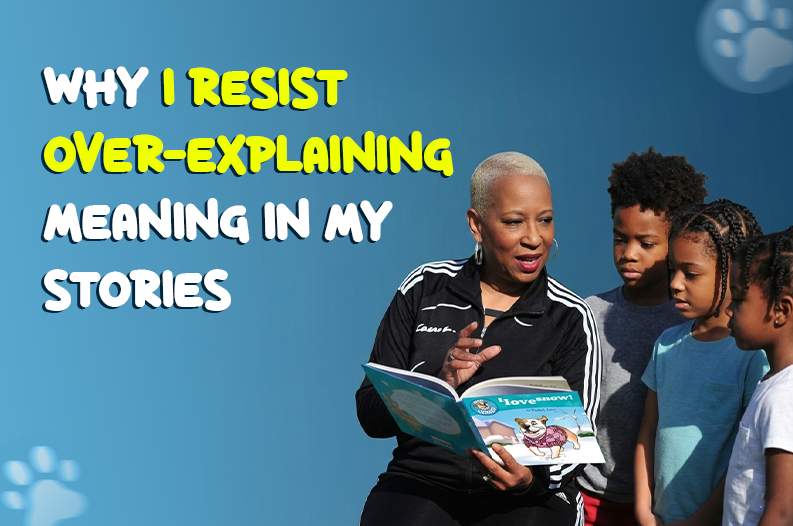
In children’s storytelling, there is often an expectation that meaning should be delivered directly. That a lesson should be visible, clearly stated, and easily repeated. I understand that intention, but I also find that it can sometimes limit the reader’s experience. When everything is explained too early, there is no space left for discovery.
Trusting the Reader’s Inner Understanding
One of the quiet decisions I make as a writer is to trust the reader. This trust is not about assuming understanding. It is about allowing understanding to form naturally. A child does not always need to be told what a moment means in order to feel its weight. They often arrive at meaning in their own time, through attention, repetition, and emotional recognition.
I have noticed that children are far more intuitive than we often assume. They read tone before language. They notice pauses before explanations. They understand emotional shifts even when they cannot name them. When a story leaves space instead of filling it, they step into that space with their own interpretation.
The Risk of Over-Definition
There is a point in writing where explanation can begin to replace experience. A story may still function, but something subtle is lost. It becomes more about instruction than exploration. I try to stay aware of that moment in my writing process.
When meaning is over-defined, it becomes fixed. But emotional understanding is rarely fixed. It changes depending on timing, age, and personal experience. A child may read the same story at different moments in their life and understand it differently each time. That shifting understanding is something I value deeply.
What Remains Unsaid
Some of the most meaningful parts of a story are not written in words. They exist in what is implied, what is suggested, and what is left open. I often think of these as the quiet spaces of storytelling. They are not empty. They are active in a different way.
When a child finishes a story and sits in silence for a moment, I see that as part of the story continuing. It is not the end of understanding. It is the beginning of reflection. And I have learned that reflection is where meaning becomes personal.