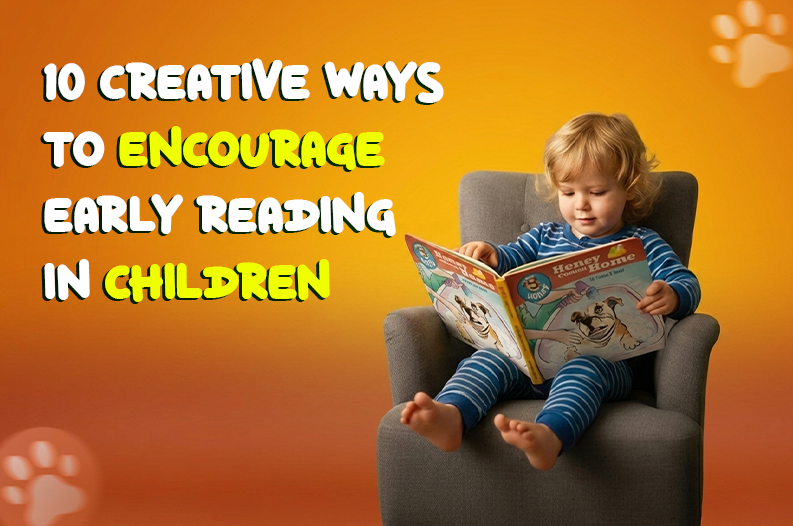
10 Creative Ways to Encourage Early Reading in Children

How Hey Honey Encourages Problem-Solving in Children

Helping your child start reading is exciting and a little scary at the same time. You want them to enjoy stories, recognize words, and feel proud of themselves.
But, the problem is how to encourage kids to read. Children don’t just fall in love with reading overnight. They need curiosity, encouragement, and, most importantly, fun.
Reading isn’t just about words on a page. It’s about stories, imagination, and confidence. And just like any journey, the first steps need guidance.
Here’s a simple, step-by-step guide to 10 early reading activities for kids to encourage early reading habits, easy, fun, and realistic for everyday life.

1. Start With Short, Daily Storytime

Simple Kids Reading Tips, like setting a daily reading time, can greatly improve a child’s literacy skills. Children respond best to short, consistent routines. Set aside 10 to 15 minutes each day. It doesn’t need to be long.
Make it lively:
    • Use funny voices for characters
    • Pause and ask, “What do you think happens next?”
    • Let your child point to pictures or repeat words
When story time feels like play, your child looks forward to it. They won’t see it as homework, they’ll see it as fun.

2. Let Your Child Pick the Book

Children love having choices. Instead of choosing every story yourself, let your child pick a book.
Some may love animals, others trucks, fairy tales, or silly adventures. When they choose, they feel excited and in control. That excitement makes them more eager to read.

3. Create a Cozy Reading Spot

Children respond to special spaces. It doesn’t need to be fancy, a few pillows, a small basket of books, and a quiet corner is enough.
You can tell them: “This is your reading spot.”
Having a space that belongs to them makes reading feel personal. They’ll want to spend time there again and again.

4. Create Environment for a Fun Reading Activities

Parents can support Developing Literacy Skills by encouraging kids to read different types of books. Kids learn best when they’re having fun. 
Try these simple ideas:
    • Spot a word you know in the book
    • Guess what happens next
    • Clap or make a sound when a certain word appears
Games make reading interactive. Your child will enjoy books without even realizing they are learning.

5. Look at the Pictures First

Pointing at pictures while reading is a simple Interactive Reading Techniques method. Picture books are perfect for beginners.
Before reading the words, ask your child to tell their own story from the pictures:
    • “Who is this character?”
    • “What are they doing?”
    • “What might happen next?”
This encourages imagination and helps children connect pictures and words.

6. Act Out the Story

Children love movement and pretending. Fun Storytime Activities make reading more exciting for young kids.
After reading, act out the story together. Pretend to be characters. Use toys as props. Walk around acting out the scenes.
This makes the story memorable. Children remember it better and enjoy reading more.

7. Use Everyday Words

Reading isn’t only for books. Words are everywhere, street signs, store names, food labels, even simple instructions at home.
Point to letters and words. Ask your child to sound them out or find a familiar word. This helps children understand that reading is part of everyday life.

8. Celebrate Small Wins

Every step counts. If your child recognizes a word, finishes a page, or retells part of the story, celebrate it.
You can say:
    • “I love how you remembered that word!”
    • “You finished that page all by yourself, great job!”
Praise builds confidence. Confidence makes children want to read more.

9. Read Together

Instead of only reading to your child, involve them. Take turns reading sentences. Repeat words together. Describe pictures. Asking questions while reading is one of the most useful Parent Reading Strategies.
Shared reading makes children feel like real readers. It also gives you special moments together.

10. Be a Reading Role Model

Children copy what they see. If they see you reading books, newspapers, or magazines, they will want to read too. Storytelling is a powerful method to increase reading motivation for children
Sit together quietly. Let your child read their story while you read yours. This shows them that reading isn’t just for school, it’s fun and lifelong.

Final Thought

Encouraging early reading isn’t about rushing. Some days will be full of curiosity and excitement, others may feel slow or frustrating. That’s perfectly normal. What matters most is making reading fun, interactive, and part of everyday life.
One day, without being asked, your child may pick up a book and start reading on their own. And in that moment, you’ll realize, you didn’t just teach them to read. You helped them fall in love with reading.

FAQ

At what age should children start learning to read?

Most children begin recognizing letters and simple words between ages 3 and 5. However, every child learns at their own pace. The most important thing is to introduce books early and make reading enjoyable rather than stressful.

What if my child loses interest in reading quickly?

That’s completely normal. Young children have short attention spans. Try shorter story sessions, interactive books, or stories with colorful pictures. When reading feels like play instead of study, children naturally stay interested longer.

How can parents make reading fun at home?

Simple activities can make a big difference. Use funny voices while reading stories, ask children to guess what happens next, or act out parts of the story together. These small interactions turn reading into an exciting experience.

Should children read every day?

Yes, even a few minutes of reading daily helps build a strong habit. A short story before bedtime or a quick reading session during the day can slowly improve vocabulary, imagination, and confidence.

© 2017-2026 Paula Carr All rights reserved.

Share this post in

Join today!

Paula I. Carr

Paula I. Carr is a Washington, D.C.–based author and creator of the Hey, Honey! children’s book series.

Share this post in

Join today!