How Hey Honey Encourages Problem-Solving in Children
Childhood is naturally filled with imagination. One moment a child is building a castle with pillows, and the next moment they are pretending to be a doctor, teacher, or explorer.
To adults, it may look like simple fun.
But inside a child’s mind, something very meaningful is happening.
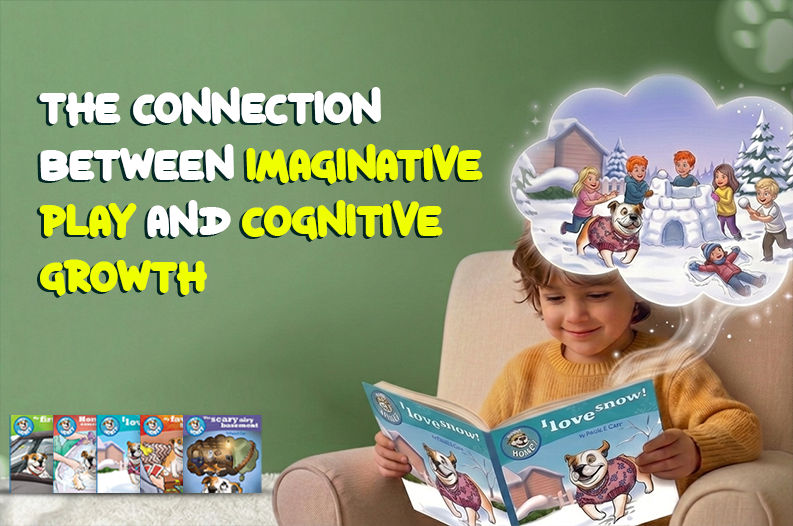
Children are learning how to think, create ideas, and understand the world around them. Experts often talk about the strong link between Imaginative Play and Child Development because imagination helps children grow mentally and emotionally.
When children pretend, invent stories, and create their own little worlds, they are building important thinking skills without even realizing it.
And the best part is that this learning happens naturally through play.
How Imagination Supports Cognitive Growth
When children take part in pretend games, their brains start organizing ideas and situations. They imagine characters, build stories, and decide what should happen next.
This kind of activity supports Cognitive Growth Through Play because children must think about actions, decisions, and results.
For example, a child pretending to run a toy store must decide what to sell, who the customers are, and how the story will move forward. While it looks like a simple game, the child is actually practicing planning and decision-making.
These playful decisions help strengthen memory, attention, and understanding.
Over time, children who regularly play this way become better at solving problems and thinking creatively.
Creative Play Activities Help the Brain Grow
The early years of childhood are very important for learning and brain development. During this time, the brain forms many connections that support future learning.
This is where Creative Play Activities become valuable.
Drawing, storytelling, building with blocks, or pretending to go on an adventure allow children to explore ideas freely. They imagine situations, try different roles, and experiment with new possibilities.
These playful experiences support healthy Brain Development in Children because they encourage curiosity and flexible thinking.
Children who often use their imagination usually feel more confident expressing ideas and exploring new thoughts.
Learning Through Imagination Builds Problem Solvers
Even during play, children face small challenges.
Maybe their tower of blocks falls down.
Maybe they need a new ending for the story they are telling.
Maybe two characters in their pretend game disagree.
These situations become learning moments through Learning Through Imagination.
Instead of asking an adult to solve every problem, children begin to test different ideas. They try again, adjust their plans, and continue the game.
This process strengthens Imagination and Problem-Solving because children learn to think independently and explore solutions.
At the same time, it helps develop Critical Thinking Skills in Kids. They learn how to observe problems, consider choices, and make decisions.
These thinking skills will later help them in school and everyday life.
Play-Based Learning in Early Childhood
Many educators believe strongly in Play-Based Learning, especially during the early years of education.
In this approach, children learn through playful activities rather than strict lessons. They explore ideas through storytelling, building games, role-play, and creative activities.
These experiences support Early Childhood Cognitive Growth because children are actively involved in learning. Instead of simply listening, they are thinking, exploring, and discovering.
Play-based learning also helps children develop social skills. When children play together, they learn to share, take turns, and cooperate.
These small interactions help build confidence and communication skills.
Simple Educational Play Ideas for Home
The good news is that imagination does not require expensive toys or complicated games.
Sometimes the simplest activities are the most helpful.
Parents can support imagination by creating small opportunities for creative play at home. These Educational Play Ideas can easily become part of daily life.
Children can create stories using toys or stuffed animals.
They can build houses using pillows and blankets.
They can draw pictures of imaginary places or adventures.
They can pretend to run a restaurant, hospital, or classroom.
These small games allow children to explore ideas, express emotions, and build creativity.
Parents can sometimes join the fun, but it is also important to allow children to lead the game. When children guide the story, they practice leadership and independent thinking.
Conclusion
Imagination may look like a simple part of childhood, but it plays a powerful role in learning and mental growth.
Through pretend play, storytelling, and creative exploration, children develop important thinking skills that help them understand the world.
These playful moments quietly build the foundation for problem-solving, creativity, and confidence.
So the next time your child turns the living room into a jungle adventure or pretends to travel to space, remember something important.
They are not just playing.
They are learning, thinking, and growing.
FAQ
Why is imaginative play important for children?
Imaginative play helps children develop creativity, thinking skills, and emotional understanding while supporting healthy brain growth.
How does imaginative play help brain development?
It encourages children to create stories, solve problems, and think through different situations, which strengthens their mental abilities.
At what age do children start imaginative play?
Most children begin simple pretend play around the age of two, and it continues to grow as they get older.
How can parents encourage imaginative play?
Parents can offer simple toys, art materials, and storytelling opportunities while giving children the freedom to create their own games.
© 2017-2026 Paula Carr All rights reserved.