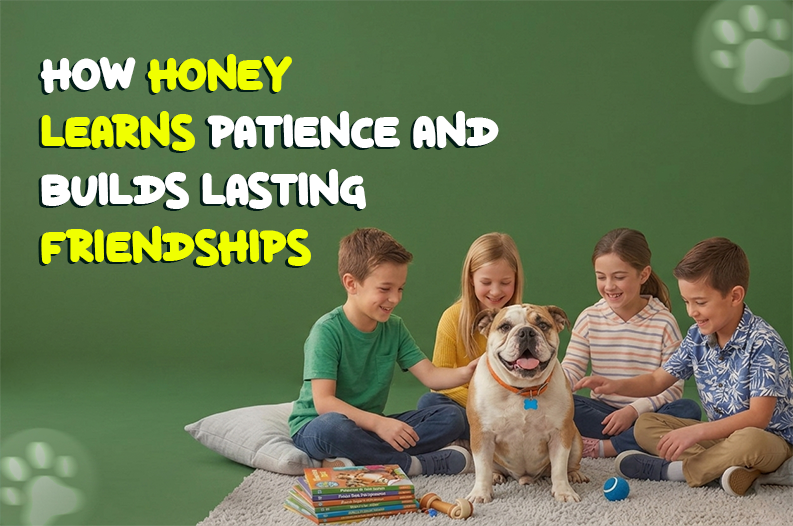
How Honey Learns Patience and Builds Lasting Friendships

How Hey Honey Encourages Problem-Solving in Children

The Day Honey Learned to Wait
It was a bright morning, and Honey was eager to play. She rushed outside with her favorite toys, ready for her friends to join. But as she waited, nobody came right away.
At first, she felt a little upset. Why did it take so long for her friends to arrive? She almost wanted to play alone — but then she remembered something her mom always said:
“Good things take a little patience, Honey.”
So, she waited — quietly, curiously, and soon, she saw her friends running down the path. That small moment of waiting became the start of a beautiful lesson in patience and friendship.

Teaching Patience to Children Through Small Moments

Children, like Honey, live in a fast world. They want things right away — whether it’s their favorite snack or a turn on the swing. But patience doesn’t come naturally. It’s something children learn through experience, stories, and gentle guidance.
Patience teaches kids to pause, think, and handle their feelings when things don’t happen instantly. When parents read stories about waiting or taking turns, they help children understand that not everything comes quickly — and that’s okay.
Simple activities like baking cookies, watering plants, or even waiting for their favorite show can help build this skill naturally.

    Learning Kindness Through Friendship

    Honey didn’t just learn to wait — she also learned to care.
    When one of her friends tripped and dropped her toy, Honey stopped playing to help. Another time, she shared her favorite coloring pencil, even though she loved using it the most. These little acts of kindness taught her something powerful: when you give, you also grow.
    That’s what learning kindness is all about — it’s not a big lesson taught in a classroom. It’s built slowly, through moments of care, patience, and understanding.

    Why Social Skills Development in Children Matters

    The early years are full of opportunities to teach patience and friendship. Storytime plays a huge role here — children see how characters handle challenges, emotions, and relationships.
    Stories like Honey’s show how waiting, sharing, and listening can make friendships stronger. Parents can use simple moments after storytime to talk about feelings:
    • “How do you think Honey felt when she waited?”
    • “What would you do if your friend needed help?”
    These conversations help children connect stories to their own experiences — a key step in developing positive peer relationships in early childhood.

    A Lesson That Stays Forever

    As Honey learned, patience doesn’t just mean waiting — it means trusting that good things will come. And when patience meets kindness, friendships last longer, smiles grow brighter, and hearts feel lighter.
    So tonight, when you tell your child a story, remind them of Honey’s gentle lesson:
    Good friends wait, listen, share, and care. That’s how real friendships begin — one kind moment at a time.

    FAQ

    Why is teaching patience to children important for their growth?

    Patience helps children manage emotions, build self-control, and develop empathy. When kids learn to wait and take turns, they become better at handling challenges and forming meaningful friendships.

    How can parents teach patience through everyday activities?

    Simple daily moments — like baking cookies, watering plants, or waiting for their turn — are great opportunities to practice patience. Parents can also use stories, like Honey’s, to explain that good things take time.

    What are the benefits of childhood friendships for emotional development?

    Childhood friendships teach cooperation, kindness, and problem-solving. When children learn to share, forgive, and listen, they build the foundation for positive peer relationships that last into adulthood.

    How does storytelling help children learn kindness and social skills?

    Stories allow children to see emotions and choices through characters they can relate to. When parents discuss these stories afterward, it helps children connect lessons like sharing, patience, and kindness to real-life behavior.

    What are some simple ways to encourage kindness and cooperation among kids?

    Encourage children to help friends, share toys, and celebrate others’ achievements. Praise small acts of kindness and model them at home — children learn best when they see adults showing care and cooperation.

    © 2017-2025 Paula Carr All rights reserved.

    Share this post in

    Join today!

    Paula I. Carr

    Paula I. Carr is a Washington, D.C.–based author and creator of the Hey, Honey! children’s book series.

    Share this post in

    Join today!